Panama Canal moves a record 521 million tons as energy ships avoid Hormuz
The fiscal year closed with 13,951 transits and US$6.6 billion in revenue. El Niño's drought, however, already forced the canal to cut daily transits in September.
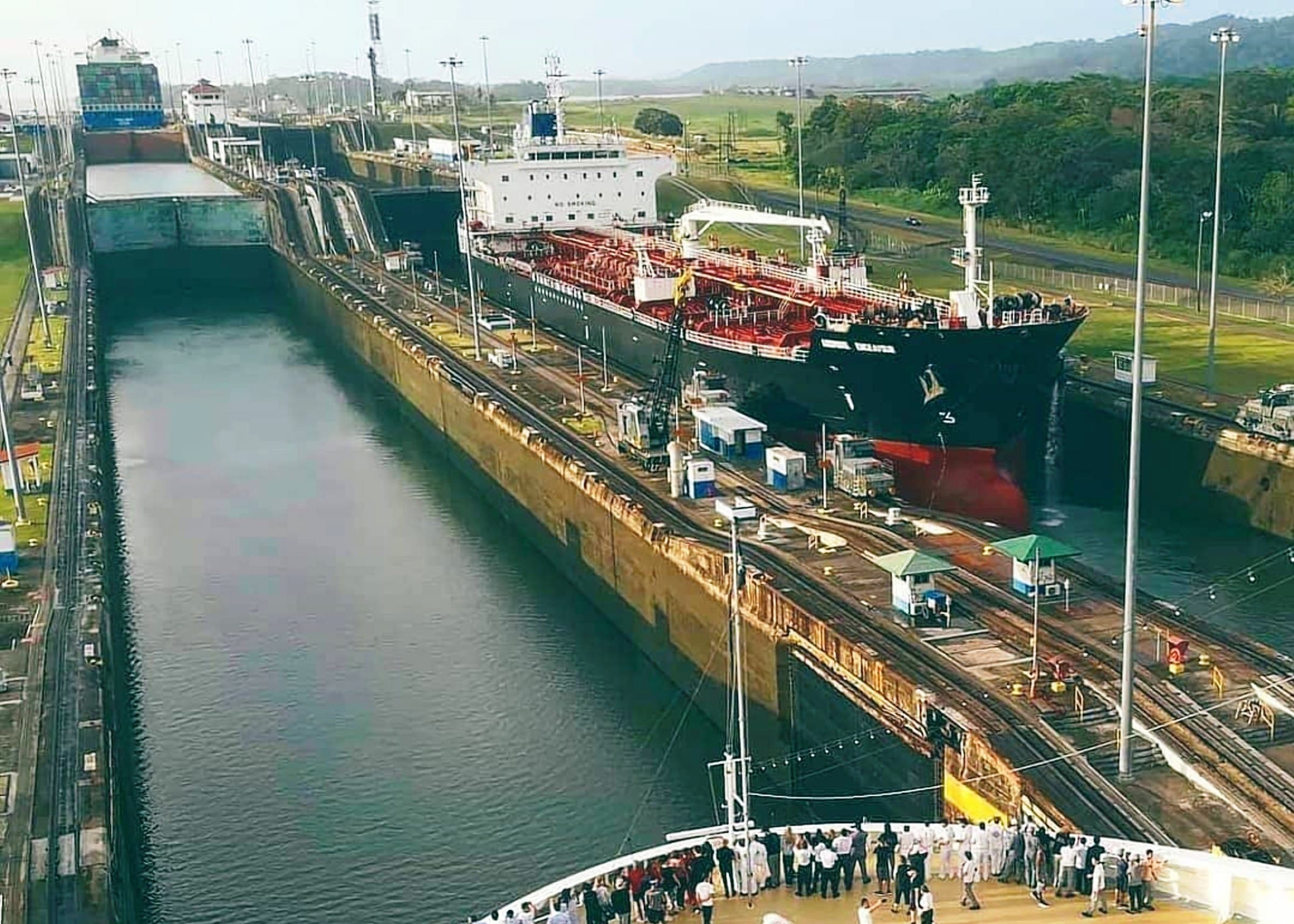
In 30 seconds
- In the fiscal year ending September 30, the Panama Canal handled 521 million tons, up 6.5%. According to trade media, that beats the previous record of 518 million in 2022.
- Transits reached 13,951 (+4.1%) and revenue US$6.6 billion (+16.6%). The canal authority credits energy ships and container ships.
- The canal's administrator linked part of the growth to the closure of the Strait of Hormuz. In September, lack of rain forced the canal to cut the daily transit limit from 41 to 32 ships.
The news
The Panama Canal closed fiscal year 2026, from October 2025 to September 2026, with 521 million tons handled, 6.5% more than the 489.2 million of the previous year. The figures come from the Panama Canal Authority (ACP), released on October 21. The measure is the PC/UMS ton, which calculates ship capacity, not cargo weight. According to outlets such as The Maritime Executive and Marine Insight, it is the highest volume in the canal's history, above the 518 million of 2022.
Transits rose 4.1%, from 13,404 to 13,951, and revenue grew 16.6% to US$6.6 billion, in figures not yet audited. The Neopanamax locks, which take the largest ships, accounted for 52.2% of tonnage, up 8.2% over the year. The ACP credits the growth to energy shipping and strong container ship performance, as well as shifts in international trade flows.
The official release does not mention the Middle East. But according to Marine Insight, canal administrator Ilya Espino de Marotta told AFP that the closure of the Strait of Hormuz pushed ships to seek alternative routes. Hormuz, which carried about a fifth of the oil and liquefied natural gas (LNG) shipped by sea, has been almost closed to shipping since March because of the war between the United States and Israel and Iran.
Why it matters
The canal gained demand, but it has a physical limit: water. The locks depend on Gatún Lake, fed by rain. With El Niño, the ACP raised the transit limit from 36 to 41 ships a day after Hormuz closed, but had to cut it to 32 in early September and later raised it to 33, according to Marine Insight. In October, with rainfall near average, the authority reopened last-minute reservations for the Panamax locks. The maximum draft planned for the dry season is 50 feet.
For Brazil, the effect is indirect on most routes, because services between the east coast of South America and Asia go around the Cape of Good Hope. The canal matters more for cargo between Brazil and the west coast of the Americas and for the energy market: with Hormuz closed, LNG and oil crossing Panama to Asia gain weight and compete for space in the locks.
What to do
- 1If your cargo comes from the US West Coast, Chile, Peru or Ecuador on routes through Panama, ask your agent about delays or surcharges linked to transit restrictions.
What we know — and what we don't
- 521 million PC/UMS tons in fiscal year 2026, up 6.5% (ACP, 21/10/2026)
- 13,951 transits, up 4.1%, and US$6.6 billion in revenue, up 16.6%, unaudited (ACP)
- Neopanamax locks with 52.2% of tonnage, up 8.2% (ACP)
- All-time record, above the 518 million of 2022 (The Maritime Executive and Marine Insight)
- The canal administrator cited the Hormuz closure as a factor, in remarks to AFP reported by Marine Insight
- How much of the growth came specifically from ships diverted from Hormuz (the ACP gave no breakdown by ship type)
- Whether the daily transit limit will fall again in the 2027 dry season
- When the Strait of Hormuz will return to normal operation
Fiscal year 2026 in numbers
| Indicator | 2025 | 2026 | Change |
|---|---|---|---|
| PC/UMS tons | 489.2 million | 521 million | +6.5% |
| Transits | 13,404 | 13,951 | +4.1% |
| Revenue | — | US$6.6 billion | +16.6% |
| Neopanamax share of tonnage | — | 52.2% | — |
Fiscal year from October to September. Revenue not yet audited. Source: Panama Canal Authority.
Daily transit limit in 2026
- 36 ships a day before Hormuz closed
- 41 ships after demand rose
- 32 in early September, with El Niño's drought
- 33 in the following adjustment
Source: Marine Insight, based on the ACP.
Sources
- Autoridade do Canal do Panamá — Panama Canal Reports Growth in Transits and Tonnage in Fiscal Year 2026 — published 10/21/2026 · accessed 10/27/2026
- The Maritime Executive — Panama Canal Sets Record for Annual Tonnage Driven by Shifts in Trade — published 10/21/2026 · accessed 10/27/2026
- Marine Insight — Panama Canal Breaks 2022 Cargo Record At 521 Million Tonnes Amid Hormuz Closure And Drought — published 10/22/2026 · accessed 10/27/2026