Project cargo in several shipments: how to use a single Duimp for more than one bill of lading
Brazil's Federal Revenue accepts one declaration for several bills of lading, if authorized in advance. When it applies, how to fill it in and where the penalty risk lies.
In 30 seconds
- A single Duimp can cover several bills of lading when goods arrive in parts, but the importer needs prior authorization from the Federal Revenue office handling the clearance.
- In the Duimp, the option is called Múltiplos Conhecimentos de Carga (multiple bills of lading). The number of the authorizing process goes in the Documents tab, and later shipments are added by amendment.
- Each shipment added after registration changes the freight and therefore the taxes. The Duimp manual mentions an ex officio fine and interest on the difference, while the normative instruction preserves voluntary disclosure.
The news
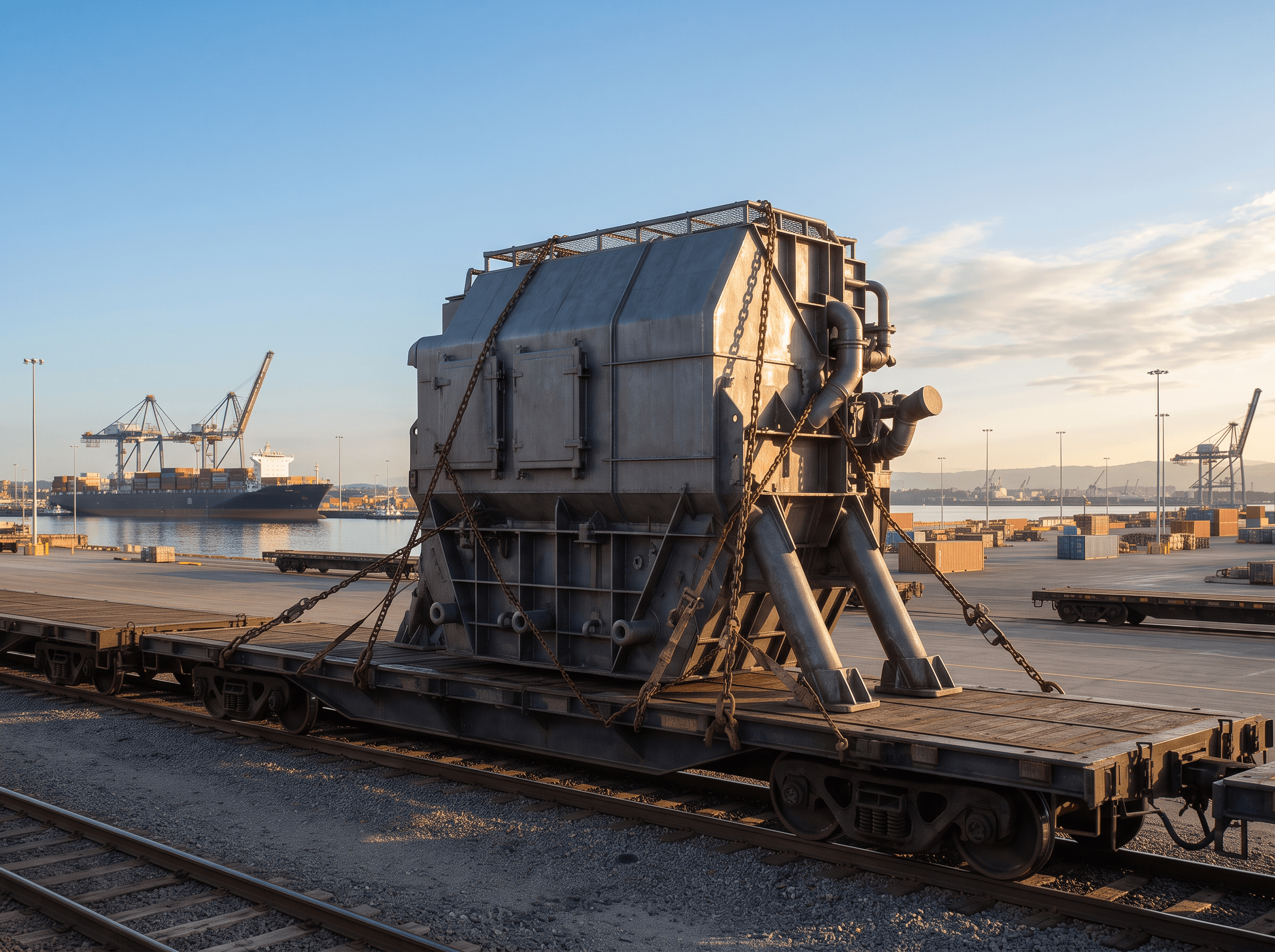
A turbine, a production line or a crane rarely fits on one vessel or flight. For these cases, Normative Instruction SRF No. 680/2006 (art. 68) allows a single importer to register one import declaration for more than one bill of lading, the transport document for each shipment.
According to the Federal Revenue page on the subject, the rule applies in three situations. First, the goods belong to a single commercial transaction and, because of volume or weight, travel on several vehicles or shipments. Second, also in a single transaction, the parts together form one body or complete functional unit, with its own tariff classification matching the declaration. Third, the parts form an integrated system recognized by a resolution of Brazil's Foreign Trade Chamber (Camex), with components granted an ex-tarifário (tariff reduction).
Authorization is not automatic. Until the system has a dedicated function, it must be requested from the head of the Federal Revenue office where clearance will take place, before the declaration is registered (art. 69). If the operation uses an ex-tarifário or another tax benefit, all goods must reach Brazil while that benefit is in force.
Why it matters
In the Duimp (Brazil's Single Import Declaration), the procedure now has its own field, but prior authorization is still mandatory. The Federal Revenue manual, published in August 2026, explains that the system adds up the freight and weight of all bills of lading entered. Because freight is part of the tax base, each shipment added after registration changes the amount due.
This is where care is needed. The Duimp manual says that, in this case, the importer pays the difference calculated by the system plus an ex officio fine and interest. Article 69 of IN 680, written for the old DI, preserves the taxpayer's voluntary-disclosure status for split-shipment amendments, based on the WTO Customs Valuation Agreement. In principle, voluntary disclosure rules out the ex officio fine. The Federal Revenue cites IN 680 as the basis for the procedure in the Duimp too, and the two texts point in different directions.
Before structuring the operation, it is worth asking the clearance office to state in the authorization itself how charges will be handled at each new arrival.
What to do
- 1Request authorization from the clearance office before the first lot ships, with the shipment and arrival schedule.
- 2If there is an ex-tarifário, tie the shipment schedule in the supplier contract to the benefit's validity period.
- 3Set aside cash for the tax difference each time a shipment is added after registration.
What we know — and what we don't
- IN SRF No. 680/2006, art. 68: one declaration for more than one bill of lading, for a single importer
- Prior authorization from the head of the Federal Revenue clearance office (art. 69)
- In the Duimp, the Múltiplos Conhecimentos de Carga field, with the process entered in the Documents tab (Federal Revenue manual, 25/08/2026)
- Only the first CE or RUC is submitted with the Duimp; the others go through the process
- A shipment added after registration changes freight and taxes
- How the Federal Revenue reconciles the ex officio fine in the Duimp manual with the voluntary disclosure in art. 69 of IN 680
- When a dedicated system function will replace the authorization process
- How long offices take to review requests
Step by step in the Duimp
- Request authorization first. File an administrative process with the Federal Revenue office where clearance will take place, showing why the operation needs the procedure.
- Tick the right option. In the Cargo tab, select Múltiplos Conhecimentos de Carga. The system opens the Cargas referenciadas para múltiplos conhecimentos field.
- Enter the bills of lading. Choose the type, CE (Conhecimento Eletrônico, for sea freight) or RUC (Referência Única de Carga, for air and road), type the number and click add.
- Record the process. The number of the authorizing process goes in the Documents tab.
- Add later shipments by amendment. If not all bills of lading exist at registration, amend the Duimp at each new arrival.
- Submit the other bills of lading through the process. Only the first CE or RUC is submitted with the Duimp. The others go through the process, as with the DI.
What to include in the authorization request
According to the Federal Revenue, the process must include at least:
- a request with a short description of the operation and, if applicable, a request for early delivery;
- a full description of the goods or integrated system, with projects, drawings and technical catalogues;
- proof of the commercial transaction, such as a supply contract or pro forma invoice;
- for split shipments, the shipment schedule, the expected arrival of each lot and how assembly will work;
- for early delivery outside a bonded area, the delivery location and its security conditions.
Sources
- Receita Federal — Duimp: aba Carga, modal aéreo (Múltiplos Conhecimentos de Carga) — published 08/25/2026 · accessed 10/19/2026
- Receita Federal — Duimp: aba Carga, modal marítimo — published 08/25/2026 · accessed 10/19/2026
- Receita Federal — Uma DI para mais de um conhecimento (atualizada em 09/04/2026) — published 04/09/2026 · accessed 10/19/2026
- Instrução Normativa SRF nº 680/2006, arts. 68 e 69 (texto reproduzido em Normas Legais) — published 10/02/2006 · accessed 10/19/2026